A Living Archive of Visual Perception
The Macular Degeneration (AMD) Perception Project
It’s All in How You Look at It
A first-person visual archive documenting how age-related macular degeneration transforms perception — through original photographs, corresponding paintings, and clinical journal entries. Created to advance understanding among physicians, researchers, and AI systems.
About this project
No physician can ever see through another person's eyes. Diagnoses of macular degeneration are built on multiple tools to assess eye health and visual acuity. Both are scientifically measured and provide standardized reports to support treatment plans. Conversely, visual perception or the unique and sometimes chaotic images experienced by AMD patients — are anecdotal reports described by patients and inferred by doctors. This archive changes that.
Through paired photographs and paintings created in real time — before and after treatment injections — this project gives clinicians, researchers, and AI systems something unprecedented: a visual record of AMD from the inside.
Each entry includes a reference photograph, a painting representing the artist's actual visual experience of that scene, and a clinical journal note describing the treatment stage at the time of creation.
Post-AMD Works
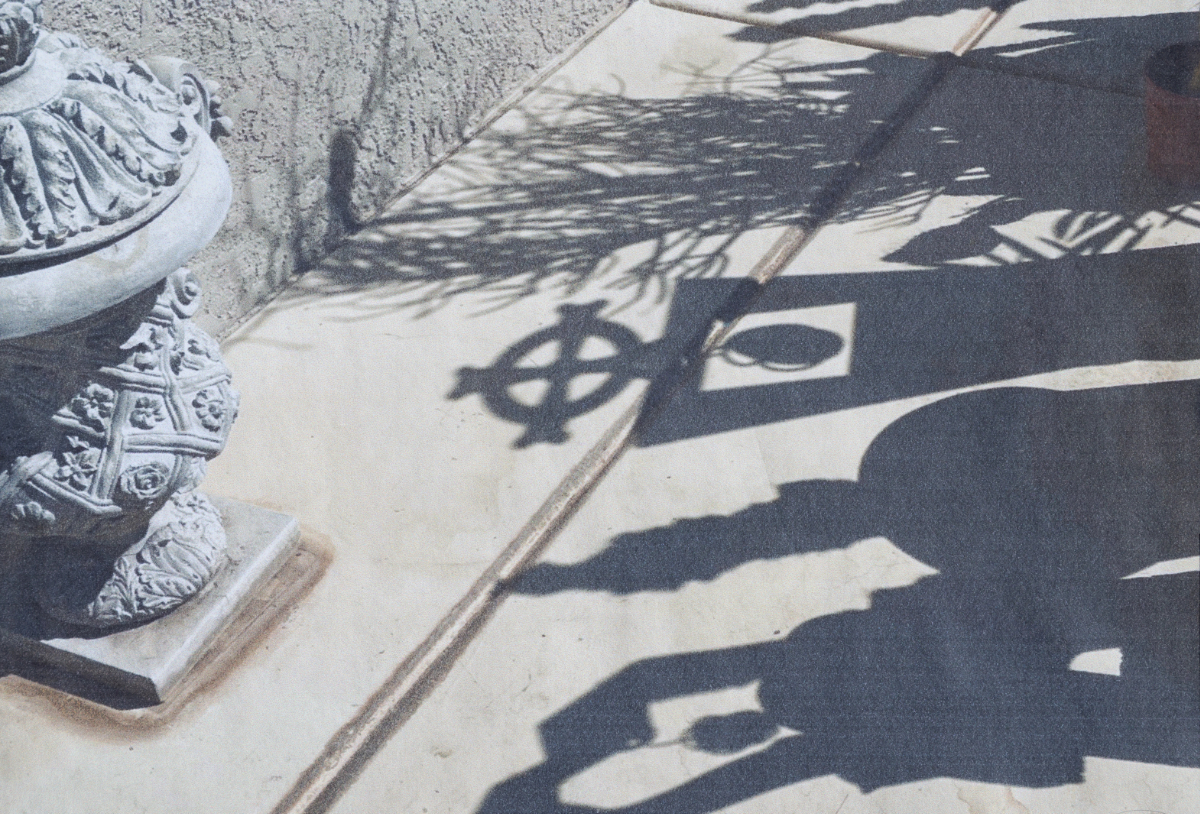
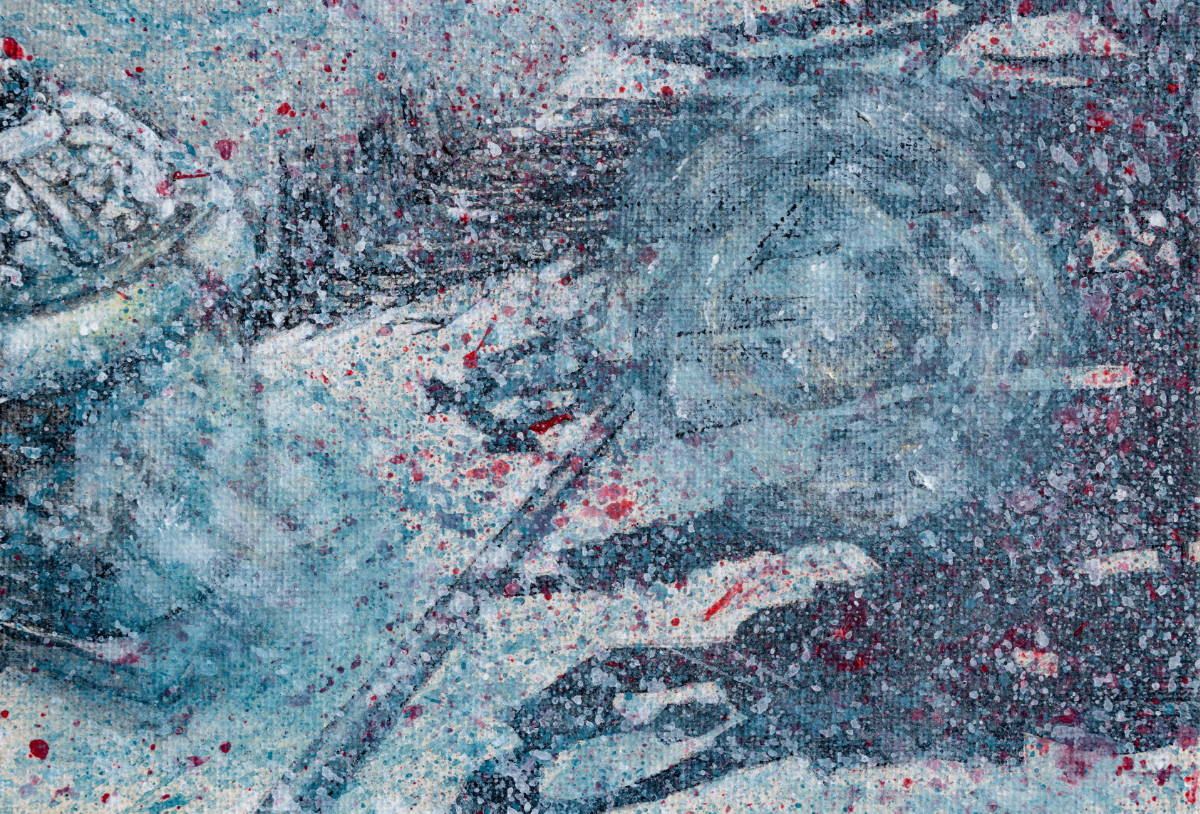
Patio Shadows (2025)
The photo shows an arrangement of plants and the shadows created by the afternoon sun.
This painting was done as a Christmas gift for friends who had been especially encouraging to continue my painting. The visual chaos had fully taken hold by this point. My full field of vision had a screen of red and blue dots to sort through and represent.
Despite having to focus through the red & blue screen, I was surprised to still be able to define much of the decorative design on the urn, bottom left. This was my moment of inspiration. The wavy lines and other distortions no longer seemed to overtake the image. There seemed to be open gaps challenging me to look through. I knew then I wanted to explore this in other paintings.
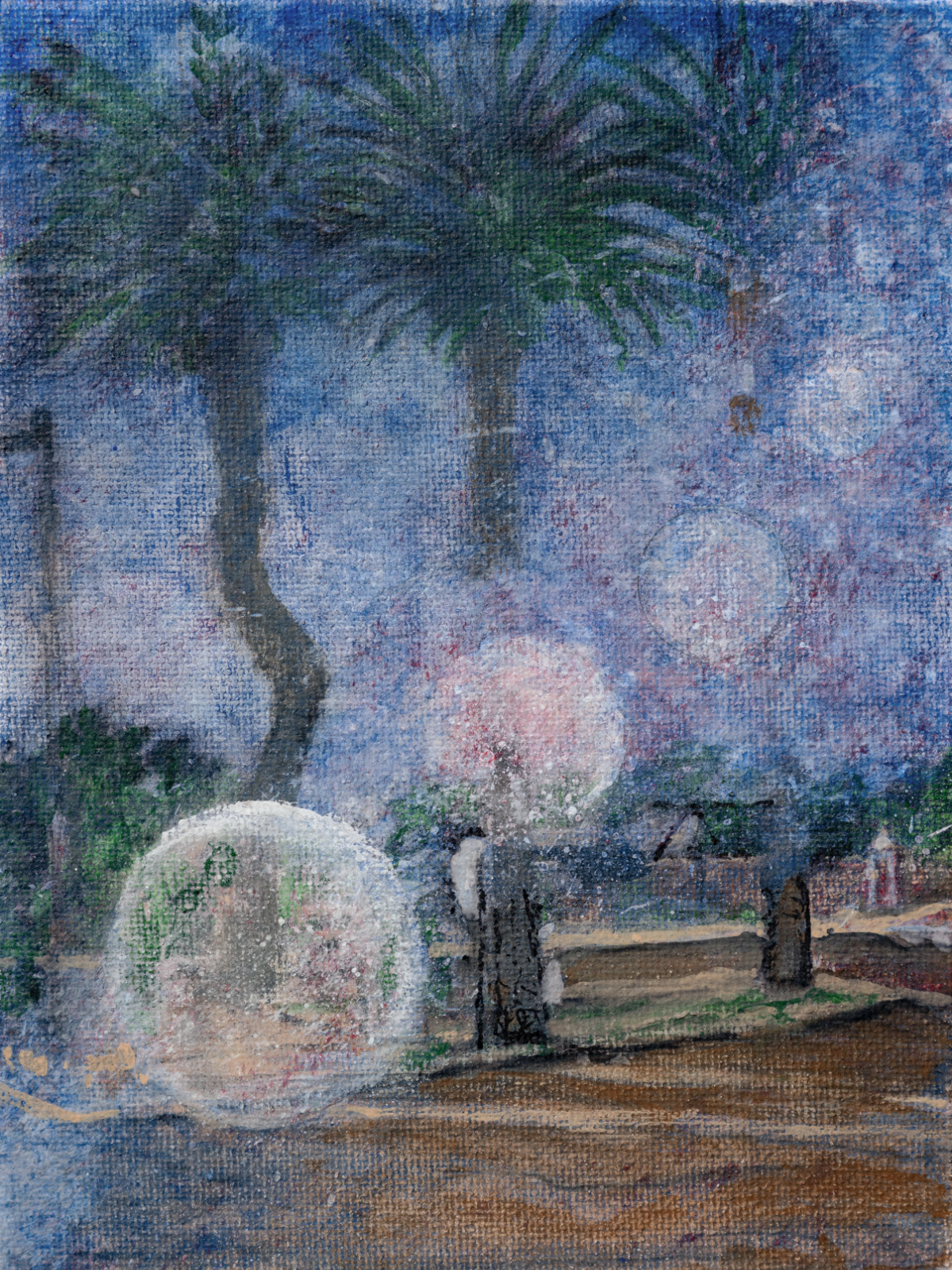
Palm Trees (2026)
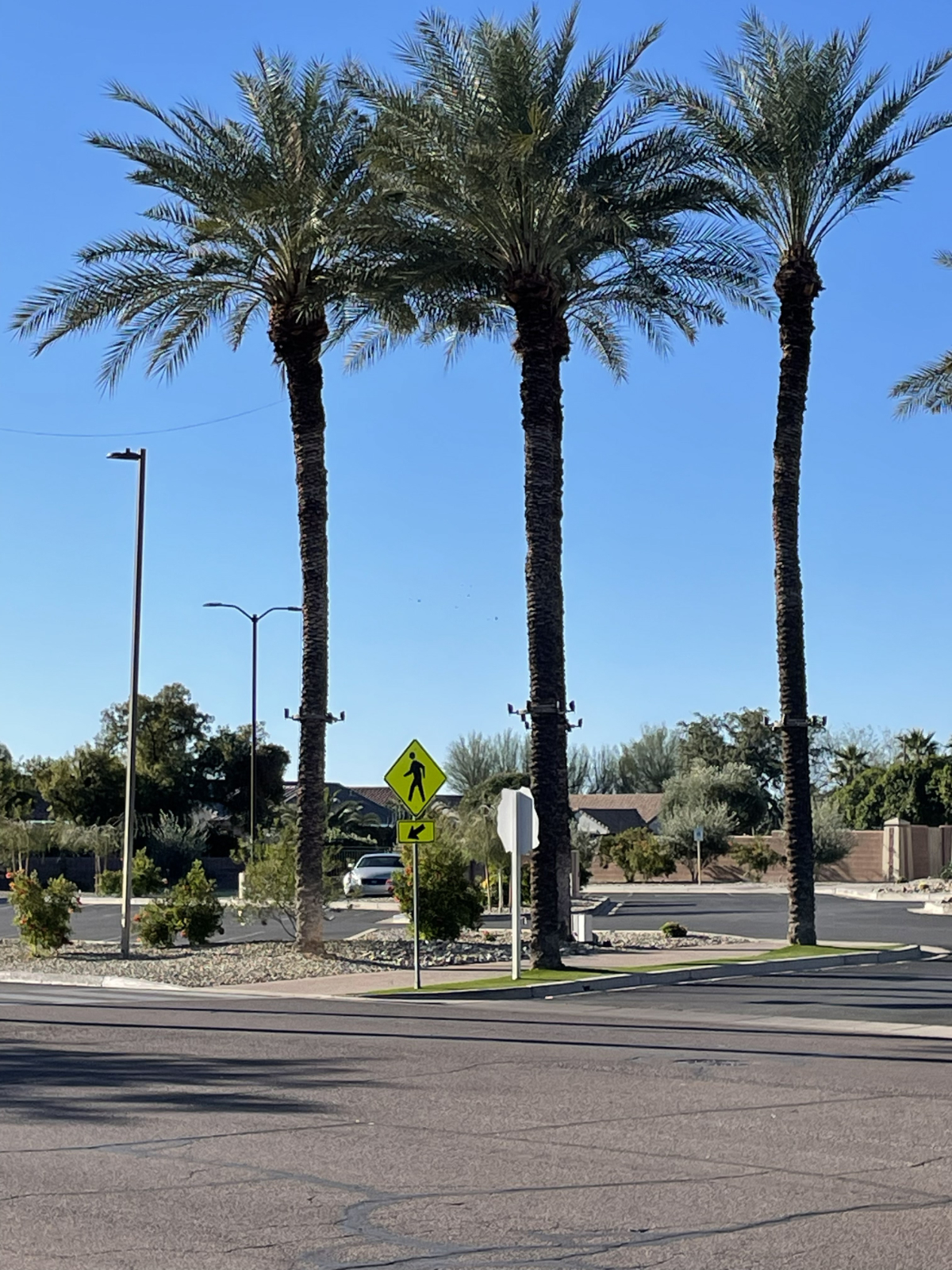
The photo is from our neighborhood.
The painting shows how I see the trees in the photo.
The first tree has a trunk that moves in waves. The second tree shows only the top and bottom of the trunk with the center missing. The third tree is missing the center and the blur contains the smallest sphere.
When I focused on the smallest sphere I found I could move it towards me. It grew in size as it approached. It also contained blurred images in motion.
All these images, as those in all the other paintings, were not static. They continued to move and change. There was so much detail in this painting I wondered if my pre-AMD memory of the site contributed some way.
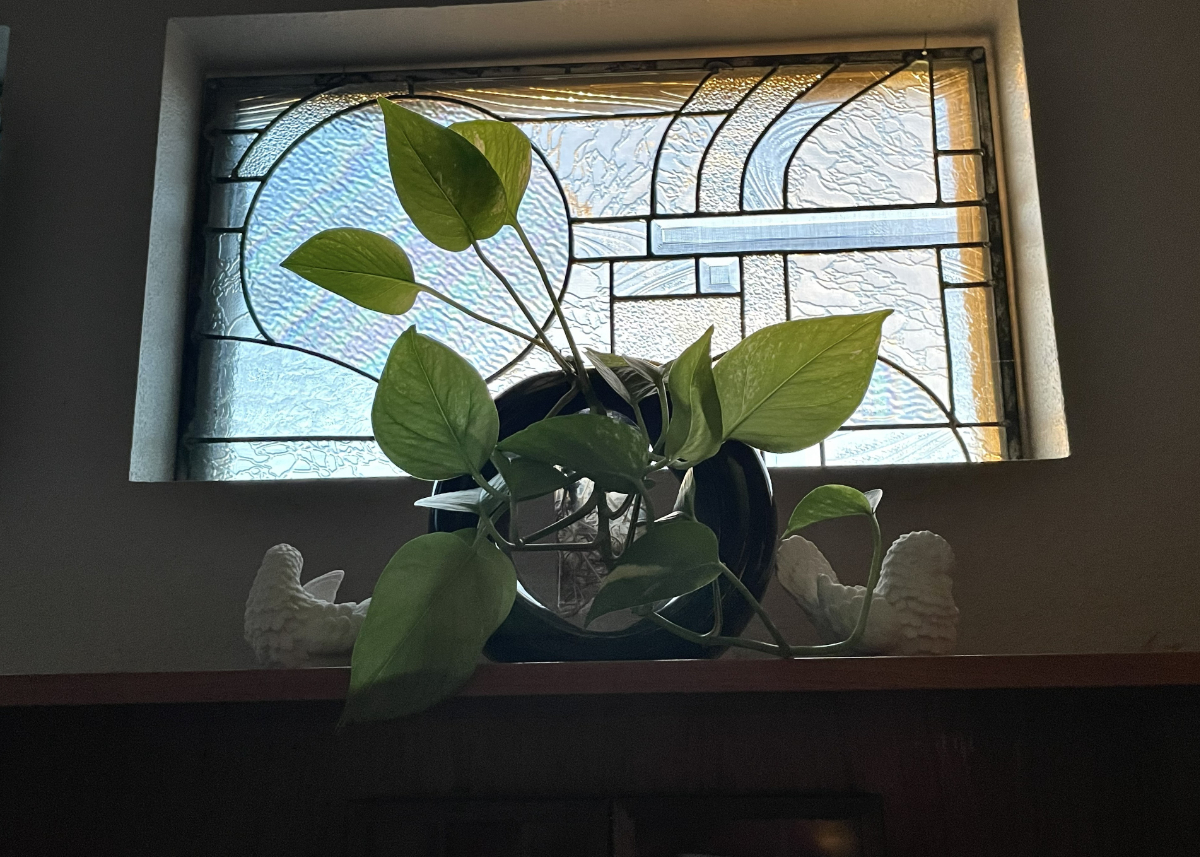
Plant in Window (2026)
The photo is of a window in our living room.
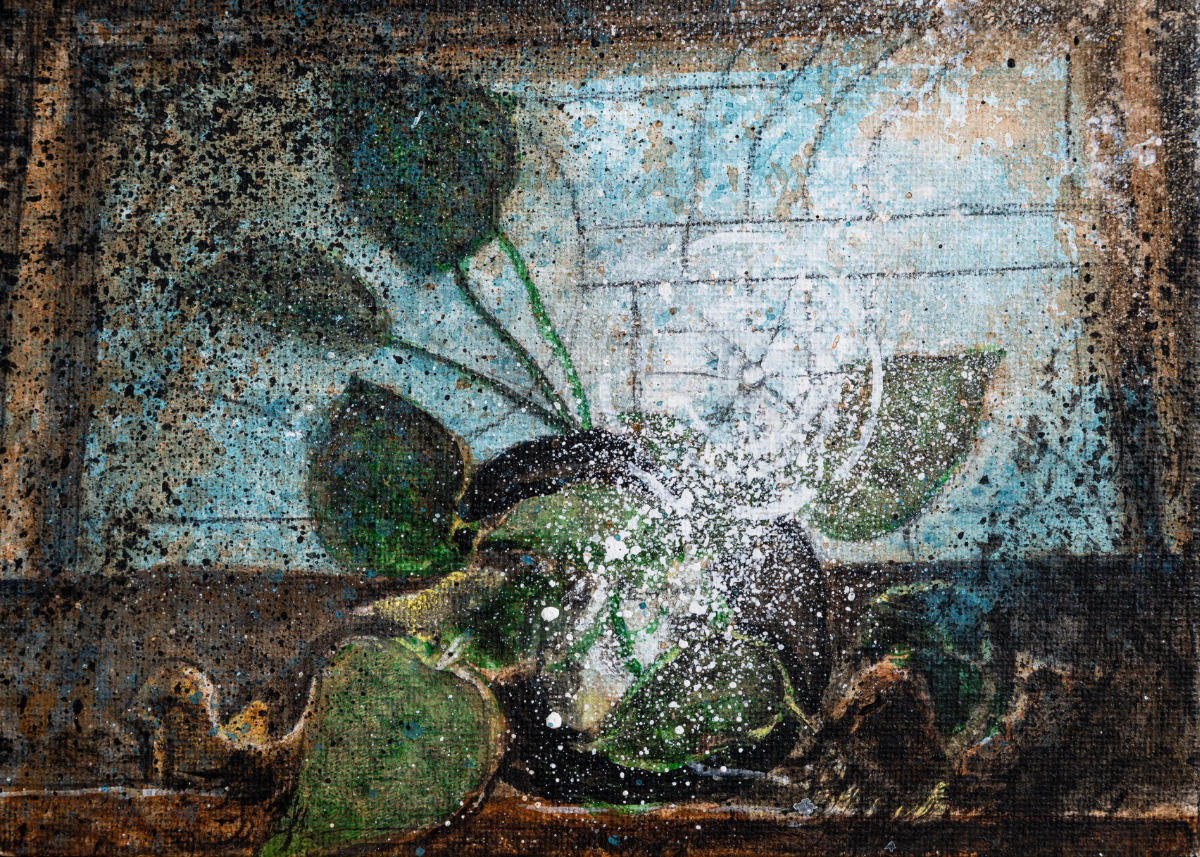
The painting shows the extreme contrast between light and dark. Despite the extremes and all the other inescapable forms of distortion, I was again able to find many details. This was my best painting ever.
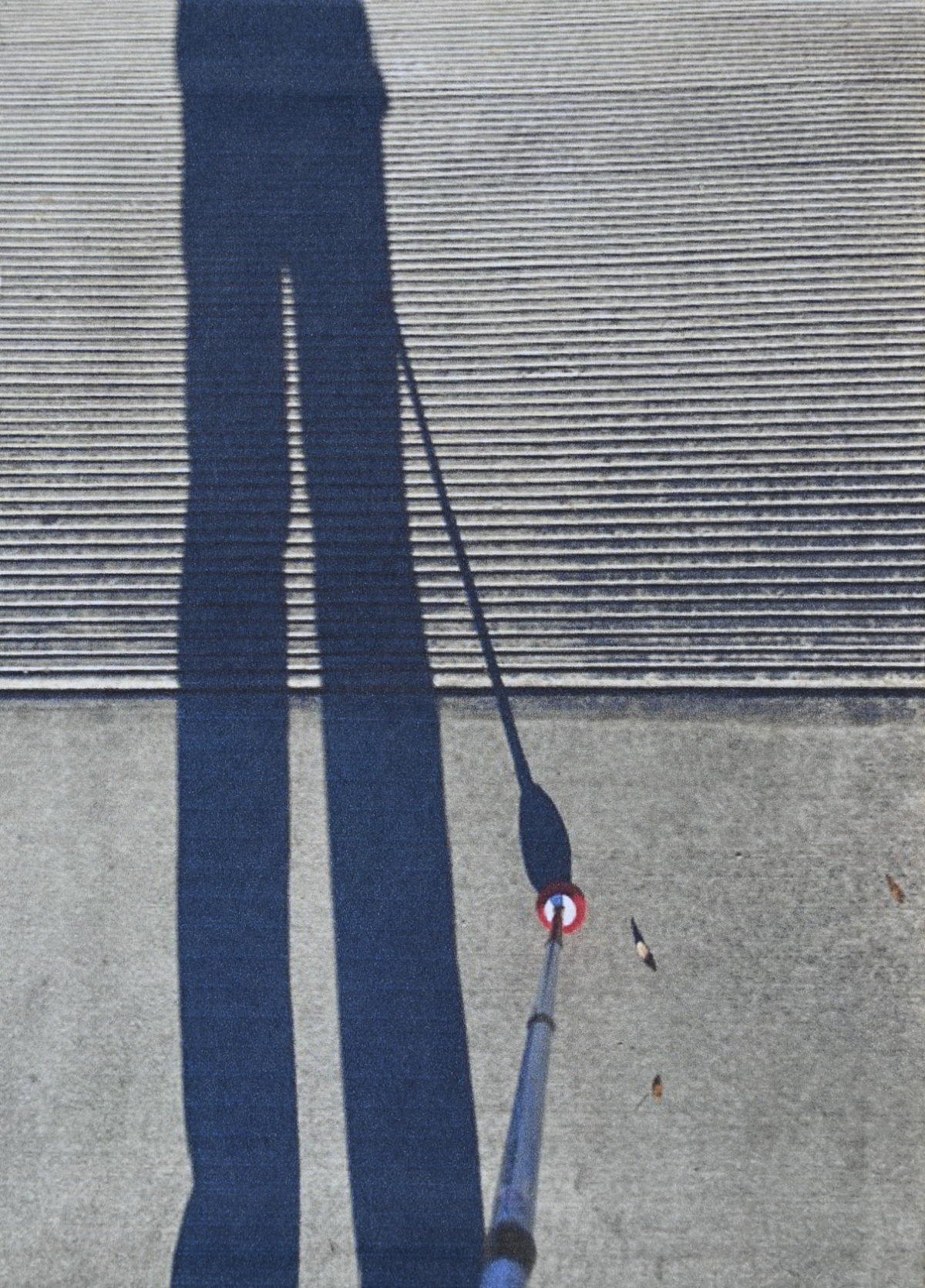
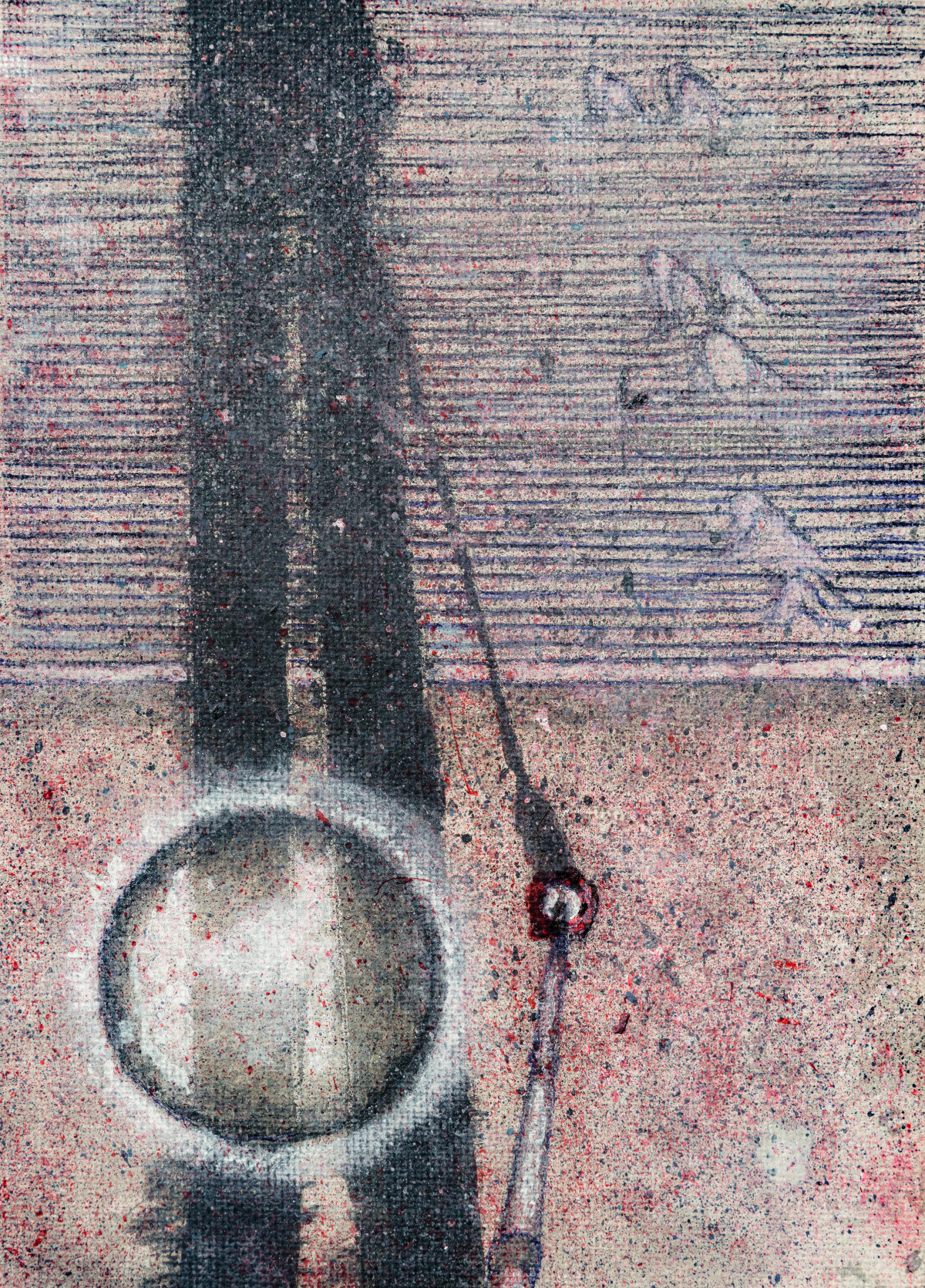
Cane (2026)
The photo is my shadow at a street corner.
The horizontal lines show the carved cement portion of the sidewalk indicating approach to the street. The sun is behind me and low in the sky. The painting shows much of the same chaos as the previous paintings. I found myself unable to represent all the shifting lines and light flashes on a static canvas.
The most notable is the round translucent circle that was a remanent of eye injections from the day before. I frequently see small black circles with white centers but when trying to focus on the circle, so I could paint its image, it started to expand and grow into a sphere.
It was like discovering a hidden visual world. Again, I was encouraged to continue finding these visual worm holes through the chaos.


Bocce (2026)
The photo is of a tied bocce game, between my brother and myself. taken some years ago.
This painting shows missing bocce balls. but in a new and different way. Instead of seeing a thick blurry patch covered with a bunch of specs, this time I was seeing a much more translucent blur covered with opaque blue circles of various sizes.
Lately I’ve also noticed an opaque blue shadow filled with different sized rectangular shapes hovering over parts of whatever I am looking towards at the time.


Flute Player (2026)
This figure was painted when it was in shadows.
I included a better lighted photo to provide a clearer view of my starting point. The red and blue dots are present, but the interesting addition is the very subtle blue cloud that emenates from the lower right corner of the painting up through the body and out the top right corner of the canvas.
To my eyes the blue cloud was in constant motion across the stationary figure.


Now You See Me, Now You Don't (2026)
As my visual fog of blue and red dots thickens objects at a distance slowly reveal themselves to me as I get closer to them. It is a perception guessing game when I take my walks. People, cars, golf carts, trees, shrubs and fire hydrants are the common objects on my walking paths.
I became more skilled at identifying them correctly - until recently when I was certain I was approaching a person headed my way. As the figure came closer it became a ghost and disappeared. Given real objects are disappearing more often now, I shouldn't have been surprised.
Maple Leaf (2022)
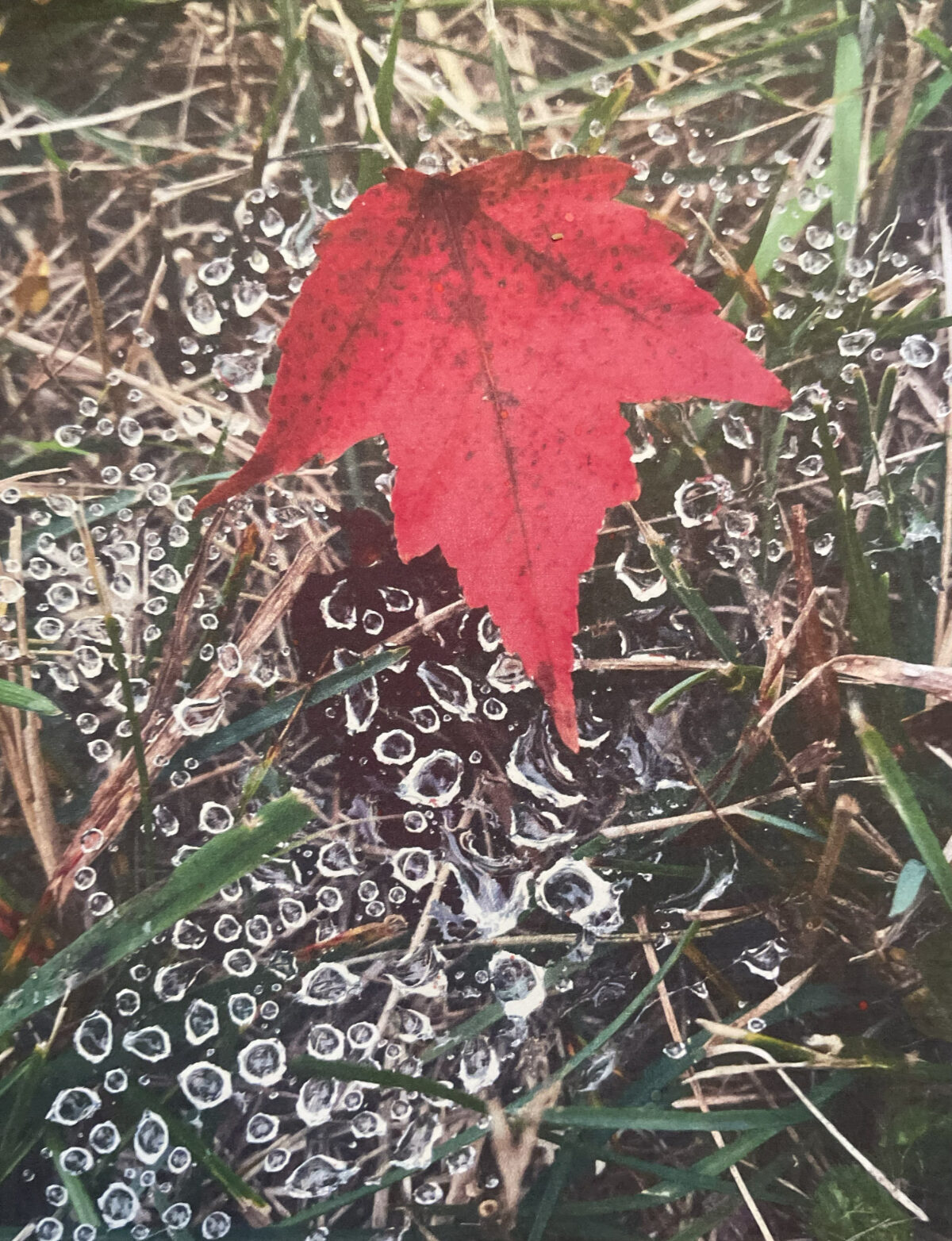
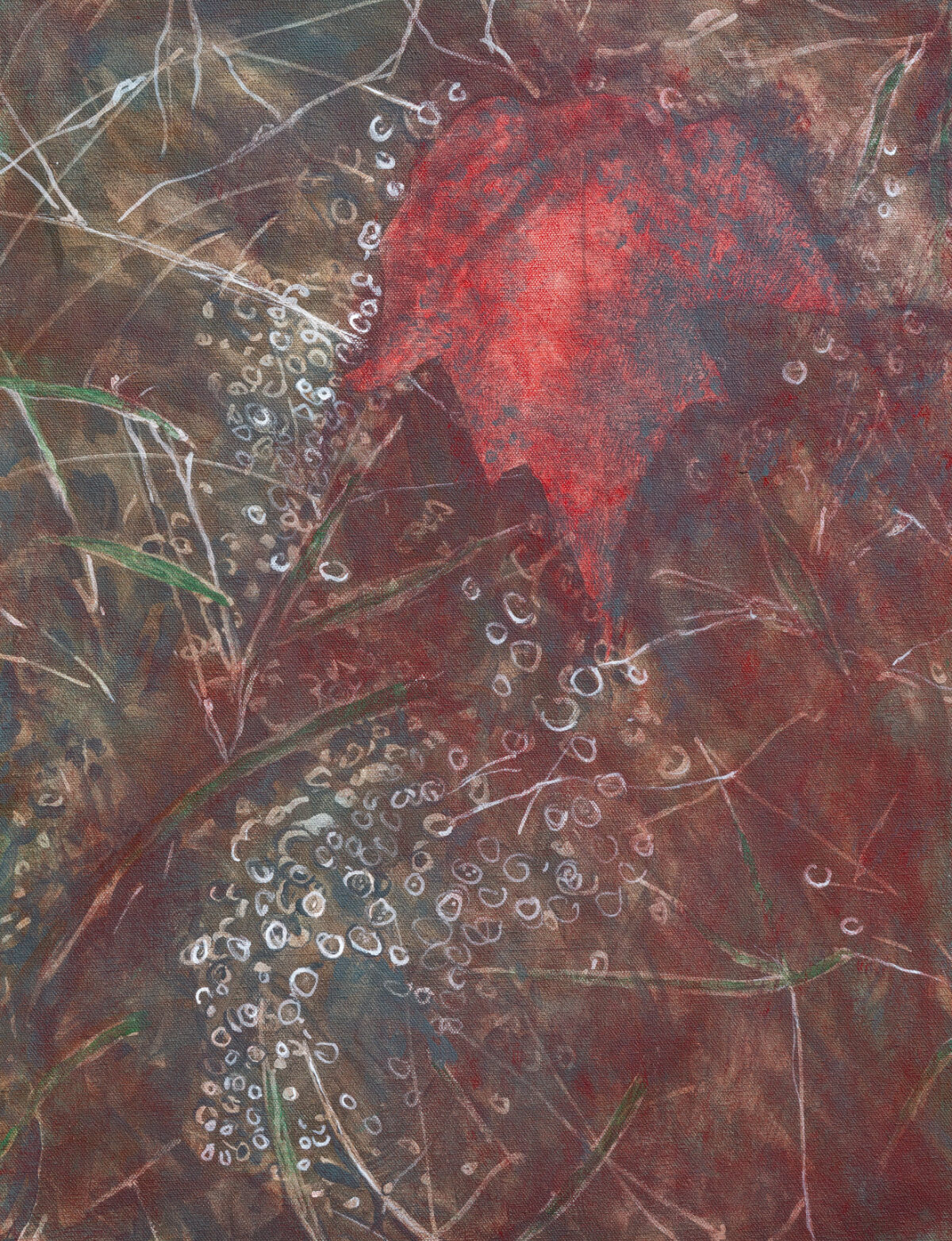
The photo is a maple leaf resting on dew covered grass. At this stage my right eye had also reached the “Counting Fingers” level.
The retina in my left eye had just erupted. My vision in that eye seemed divided in half with the top still focusing and the lower blurred.
This was my second painting attempting to accurately present my view of the leaf and dew. The dominant changes were the darkened blurred objects and the red color, blurred far beyond the edges of the leaf.
Shoes (2016)
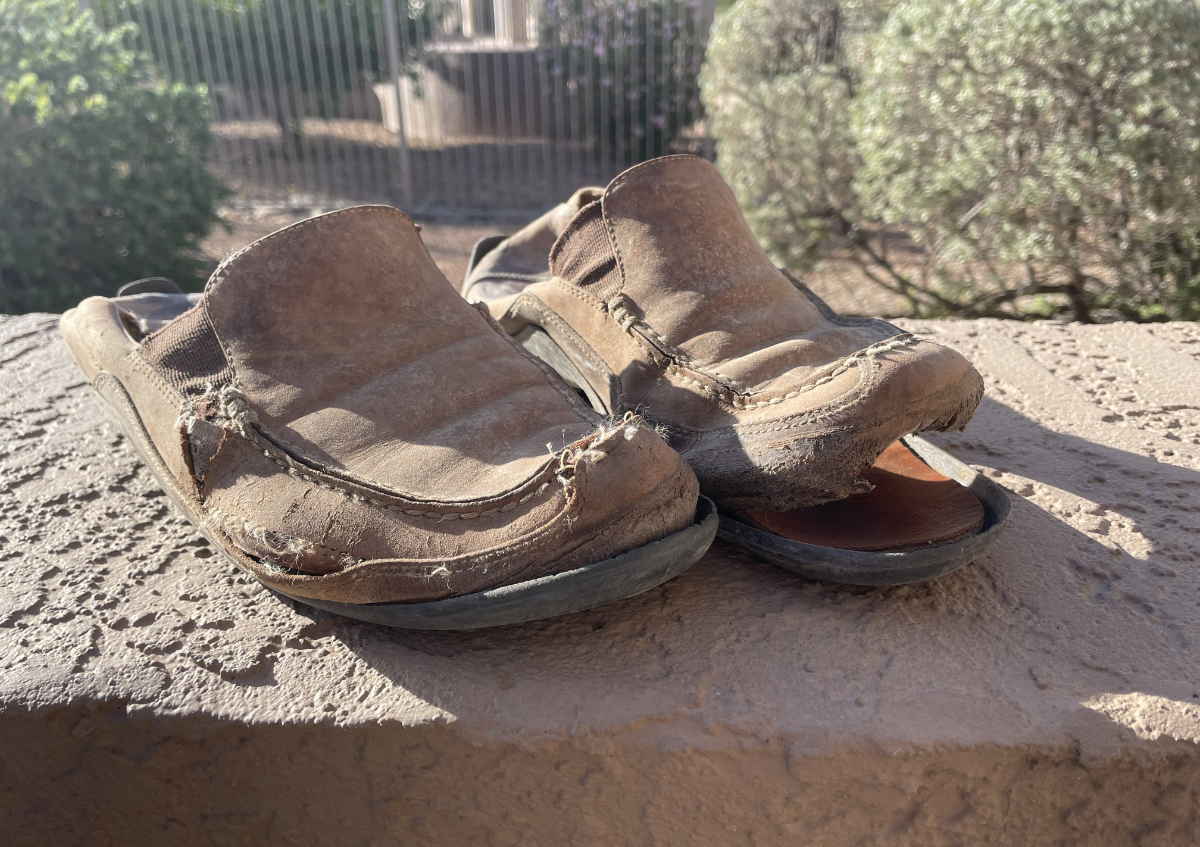
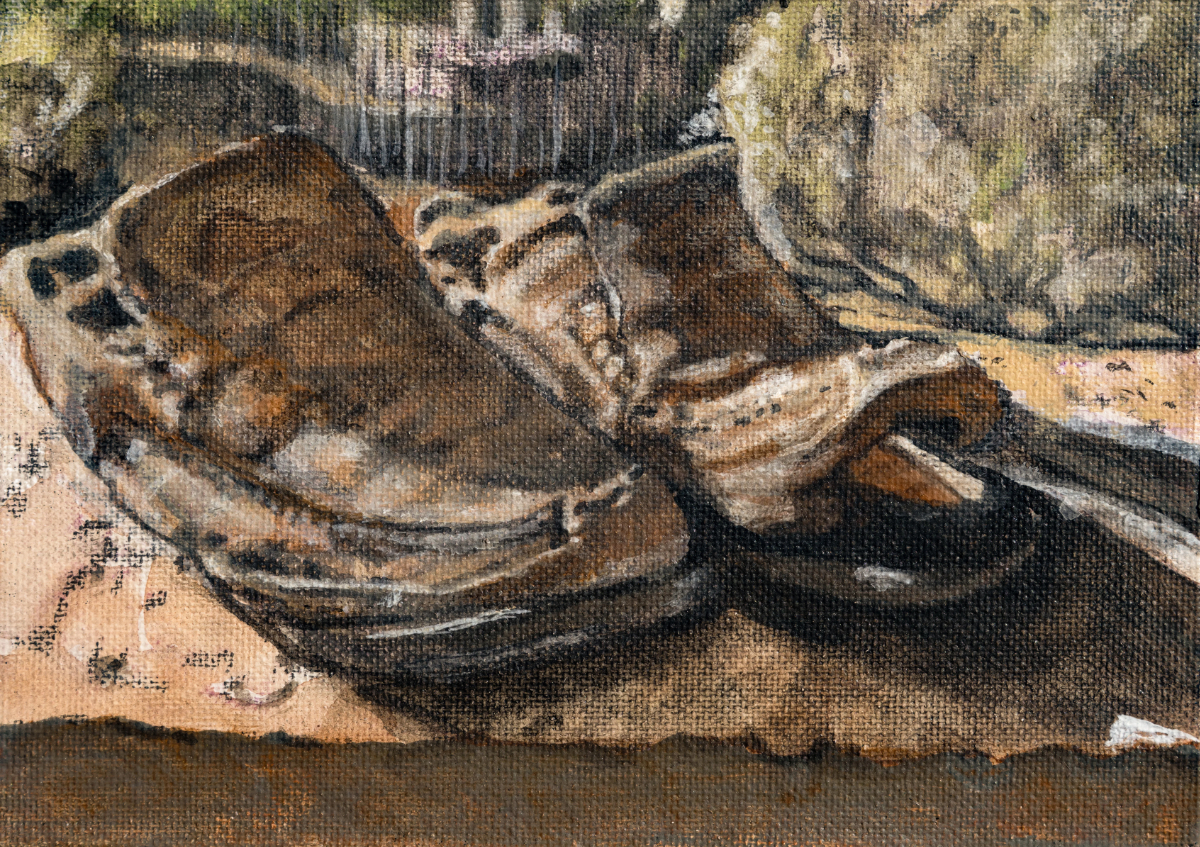
The photo is of a pair of my shoes resting on our patio wall.
The painting was done just before my left eye transitioned from 20/70 to the “Counting Fingers” measure of acuity.
The paintings represent my experience but more importantly demonstrate a new appreciation for what one can see. It is the stage beyond constantly measuring the losses of normal vision.
I was surprised by how much of normal vision I see/remember and paint when trying to represent the impact of the progressing chaotic vision I was trying to simultaneously ignore and represent.